• Impact of America First Agenda on Africa

    With Donald Trump’s return into the white house, various countries are scrambling to trump-proof their trade and/or defense policies. From the EU increase investment in defense to China preparing for another and more intensive round in the trade War. The Trump effect has shifted the political landscape to pro-activeness rather than re-activeness across the globe, except in Africa it seems. During his campaign, Trump promised blanket tariffs between 10% to 20% on goods from other countries and 60% on all imports from China. A study by LSE demonstrated that should Trump tariff proposals be instated, countries such as Germany could see a 0.23% drop in GDP and as much a -0.68% GDP loss for China[1]

    Based on his rhetorics, it is fairly safe to assume that bilateral imbalances in trades is crucial for Donald Trump. It determines whether a policy is succeeding or not. In various occasions, he has raised concern over the US trade deficit with its partners. In 2021, the U.S. goods trade deficit with Sub-Saharan Africa was $11.7 billion[2]. While this pales in comparison to Africa’s trade with China, the US trade with China is even more considerable. Trump’s re-election could reduce Africa’s already limited access to the U.S. market, as Trump seeks to reduce US trade deficit across the board. During Trump’s first term, the U.S.-Africa trade relationship saw challenges and slow growth. Trump’s protectionist stance led to increased scrutiny and imposed restrictions on imports, including from African nations. In 2017, Egypt exported approximately 170,000 metric tons of steel (worth $102 million) to the U.S., representing 3% of U.S. imports, with expectations for further growth. Despite Egypt’s hopes to increase exports by capitalizing on tariff challenges faced by competitors like Turkey, the U.S. Department of Commerce recommended steep tariffs of up to 53% on Egyptian steel to counter alleged dumping practices. This tariff would significantly impact Egypt, more so than other regions, limiting its steel export potential to the U.S.

    The return of the “America First” agenda has drastic implications for all. The African Growth and Opportunity Act (AGOA) will be re-authorized in 2025. African leaders have even lesser reason to remain as passive as they are now. AGOA, enacted in 2000, allows eligible African countries to export certain goods to the United States tariff-free. This policy aims to stimulate African economies by encouraging exports and job creation. From 2017 to 2020, U.S.-Africa trade volumes remained relatively stagnant, partly due to the administration’s lack of a targeted Africa strategy. African exports under AGOA totaled about $4.2 billion in 2020, down from a high of over $8 billion in previous years[3]. This trend demonstrated a diminishing reliance on AGOA, signaling Africa’s vulnerability to shifts in U.S. trade policy, with trades being on a downward trend in the last two decades. One country that benefits greatly from AGOA is South Africa. It exports a significant amount of steel and aluminum to the US. The country has nearly $2.7 billion worth of goods eligible for duty-free access under this agreement. In April 2018, South Africa found out it wouldn’t be spared from the new U.S. tariffs on steel and aluminum, which were raised to 25% and 10%, respectively. Before this, South Africa tried to negotiate. It suggested cutting its exports of these metals to the U.S. to 70% of the 2017 amount. It hoped this would earn an exemption. But the U.S. declined this proposal, meaning South African steel and aluminum exports would face the full tariff increases. By 2022, it exported approximately $1.5 billion in steel products to the US, which is around ¼ of the country’s total exports to the country[4]. South Africa’s large exporters such as ArcelorMittal SA and Hulamin supply aluminum products to major companies like Tesla. They could be negatively affected by the expected EV tax credit cancellation. Tesla’s founder has played a significant role in Donald Trump’s re-election. 

    The biggest impact might come from the trade war with China. This conflict could leave African countries caught in the crosshair. Under the new Trump era, both Europe and Africa may find themselves in a difficult position. They have to choose between the US-led or China-led trading blocs. This decision is where the biggest damage may be caused.  African countries should be pro-active. They need to fast-forward the pivot toward prioritizing intra-African trade. This strategy will help ensure the continent does not become collateral damage of the Trump effect.

    Should Africa First be a response to America First?

    The African Continental Free Trade Area (AfCFTA) aims to deepen integration among African nations. It could be well-positioned to capitalize on this shift. Launched in 2019, it aims to create a single market of 1.3 billion people across 55 countries, with a combined GDP of over $3.4 trillion. The agreement seeks to eliminate tariffs on 90% of goods. It also aims to promote investment. Additionally, it facilitates the movement of people and capital across Africa. Historically, intra-African trade has been low. It accounted for only about 17% of Africa’s total exports in 2019. In contrast, Asia’s intra-regional trade was 59% in the same year. Europe reported 69% for intra-regional trade. However, the establishment of the AfCFTA in 2019 is a significant step. It aims to expand Africa’s internal trade. It also seeks to reduce dependency on external markets like the U.S.  Yet, in 2023, only 100 of the 4,500 products listed under the tariff headings were traded across borders. This represented 90% of the tariff heading products[5]. A shift in trade relations with the U.S. could be the catalyst Africa needs to amplify its focus on intra-regional trade. The trump effect offers a unique opportunity. Africa can intensify its intra-regional trade efforts. It can also position itself as a trading bloc and hedge against the risk of the US-China trade war.  


    [1] https://www.lse.ac.uk/granthaminstitute/wp-content/uploads/2024/10/Economic-impacts-of-the-Trump-Tariff-Proposals-on-Europe.pdf

    [2] https://ustr.gov/sites/default/files/2022-12/SubSaharan2021.pdf

    [3] https://ustr.gov/sites/default/files/US%20Trade%20with%20sub_Saharan%20Africa%2011162023_0.pdf

    [4] https://doi.org/10.1080/03056244.2018.1500362

    [5] https://www.uneca.org/stories/tracking-africa%27s-progress-on-afcfta[3] https://ustr.gov/sites/default/files/US%20Trade%20with%20sub_Saharan%20Africa%2011162023_0.pdf

  • South Africa: Coalition Dilemma & Its Foreign Policy implications
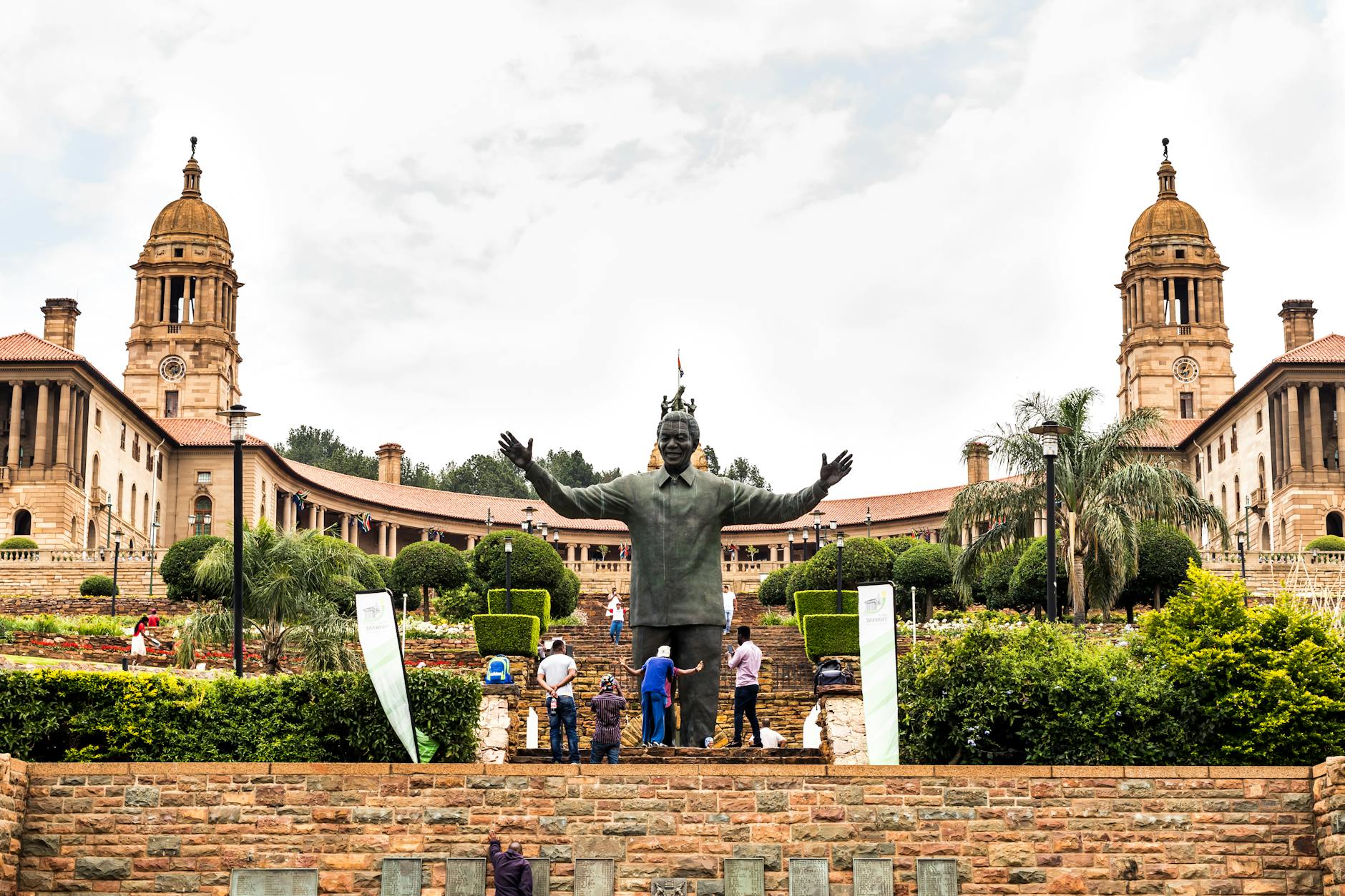
    Photo by Clayton on Pexels.com

    South Africa recently held elections that marked a significant shift in the country’s political landscape. The African National Congress (ANC), the party that has dominated the country’s politics since the end of apartheid, lost its majority grip on power for the first time in 25 years with only 40.18% of the total vote. The Democratic Alliance (DA) received the second highest number of votes at 21.81%, followed by the MK party at 14.58% and the EFF at 9.52%, and the rest is shared between other parties[1]. As a consequence, the ANC has no other choice but to forge a coalition to govern and this is where the dilemma starts. Intense speculations have emerged over the potential choice of coalition partners the ANC is leaning toward at the national level. But overall, there are seemingly three options it is faced with:

    1. An ANC-DA-IFP coalition
    2. An ANC-EFF-MK coalition
    3. An umbrella with as many parties as possible

    Regardless of the choice made, this will have drastic implications in terms of national governance, public policy and/or foreign policy.

    On Foreign policy…

    The ANC’s recent biggest achievement on this end was bringing a genocide case against Israel’s actions in Palestine in front of the International Criminal Court. This move saw South Africa make a strong return on the International scene as the worldwide Champion of human rights it once was in the post-apartheid era until Zuma’s era. But at the national political level, this decision was not shared by all political parties and was heavily criticised by some. Historically, the ANC has maintained stronger ties with the global South, particularly Africa and the BRICS nations (Brazil, Russia, India, China and South Africa). It has prioritised South-South Cooperation and multilateralism. An alliance with the EFF and MK party would not cause a drift from this ideological position. If anything, it might lead to a deeper commitment down this path with the influence of a party like the EFF, which advocates for a more radical anti-imperialist approach and deeper South-South Cooperation. 

    While the MK party is quite new, its founder ‘Jacob Zuma’ also led South Africa’s joining of BRICS during his presidency in 2009. As such, it can easily be speculated what his party will lean towards. This is even more evident when it comes to South Africa’s position on the Russia-Ukraine issue. So far, the ANC has taken great care in attempting to present a semblance of neutrality on this question calling for a peaceful resolution and emphasizing de-escalation. The MK party on the other end has made it clear in its manifesto that it would stand in solidarity with Russia, going as far as calling Vladimir Putin a ‘man of peace’[2]. Ironically, the two parties who seemed the most unable to find common ground (the DA and the EFF) found it in their stance on Russia’s actions in Ukraine. They have both condemned Russia’s action as ‘aggression’ and a ‘violation of international law’, with the EFF comparing Russia’s actions to Western imperialism and hypocrisy staying consistent with its wider anti-imperialist stand. And the DA supports sanctions on Russia, advocates for a tougher stance and has been critical of the ANC’s reluctance to condemn Russia. 

    A position that is not too dissimilar to that of the IFP, perhaps with minor nuance differences. Unlike the EFF stands on the Israeli-Palestinian conflict, the DA and the IFP stands have been more neutral with perhaps more leaning toward Israel at times when it comes to the DA. Both parties also have taken a pro-Western stance traditionally and advocate for stronger ties with the West but also shared critics of the ANC’s close ties with regimes seen as authoritarian. Another significant area of potential clash would be South Africa’s military intervention in the DRC, which the DA and the EFF have vehemently opposed in the past. As the death toll of SANDF soldiers climbs, it is unavoidable that tensions in the ANC-chosen coalition also will.

    The Wild card would be a coalition with an umbrella of parties and the uncertainty it may bring. But whatever the final tally will be, It will likely be the end of South Africa’s pretend non-alignment approach or a deeper slide down that path caused by decision paralysis as a foreign policy compromise. Ultimately, whatever this new government of national unity may look like. The ANC may find itself having to play the role of the most moderate party in whichever coalition it chooses. In case of a coalition with the DA, the IFP will be burdened with the role of having to be the voice of reason or the middle ground. As such, to avoid this constraint, foreign policy decision-making must be Issue-based and not based on ideology, as there is almost always ground for agreement. If the DA and EFF can find common ground on their stance on the Russian war in Ukraine, there ought to be a glimmer of hope that foreign policy deadlocks can be resolved.


    [1] https://results.elections.org.za/dashboards/npe/

    [2] https://www.ft.com/content/4b88d21b-a882-43ef-846d-fc13870faee9

  • 2023 Congolese Election: How a fragmented opposition handed the victory to the incumbent

    (This article was originally published by http://www.article15.cd)

    On the 20th of December 2023, we, the Congolese people went to the poll for our fourth electoral cycle in our democratic history. Before the elections, cynicism was already at an all-time high (specifically from the opposition party and the catholic church) and expectations were set for a failed election. While the elections faced some significant challenges, especially when it came to logistics, which led to the vote being extended beyond its due date in a few regions, overall, all observers said that the elections were largely free and fair.  The catholic church observer (CENCO) indicated that 84.1% of voting polls conformed with the electoral law. The Electoral Commission (CENI) stated on the first day over 70% of the voting bureau had functioned.

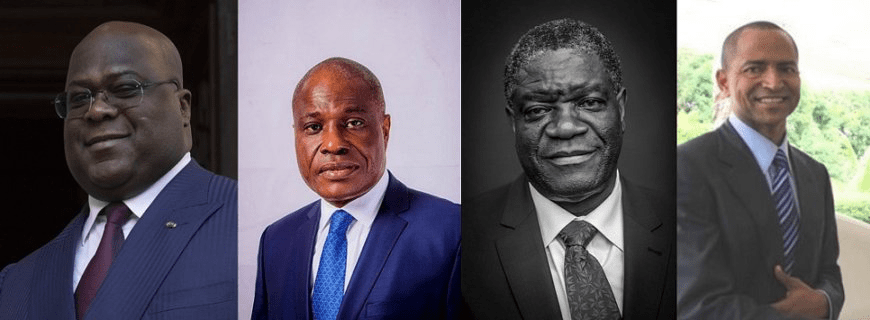
    The few bad electoral incidents were amplified by the opposition parties presenting the elections as chaotic and using this as their foothold to protest the elections and indirectly its results. The opposition drove the narrative that elections were chaotic and now arguing that they should be re-organized. Surprisingly, the various disunited opposition factions contested the elections before the results were even produced. But even more surprising is that their ground for contestation is not with the results themselves so far, but rather with the electoral process alone. But the question here that must be raised is ‘whether the few incidents of chaos during the elections impacted the results significantly enough to justify a re-do?’ But that is a question to which the various opposition groups are refusing to answer or bring evidence to the table. The tension rose further as the electoral results began to flow in and the incumbent candidate -Felix Tshisekedi- as of yesterday is leading with 77%, followed by Moise Katumbi with 17%, then Fayulu with 3% and the rest is spread between the remaining 23 candidates. This wide gap bolstered the opposition’s claim that there has been electoral fraud and they have called for protests around the country. But when looking at factors on the ground, a wide lead by Felix Tshisekedi is easily justified for many reasons.

    A disunited opposition

    The opposition’s failure to unite around a joint candidacy gave the incumbent the upper hand. During the campaign, the various opposition candidates fostered further divides as they exchanged harsh rhetoric against each other. A meeting was organised in Pretoria by the NPO, In Transformation Initiative for that purpose but failed to materialise, as well as created further distrust among the opposition.

    Following the meeting, Moise Katumbi’s team falsely claimed that he was chosen as the joint candidate of the opposition, which other big profiles such as Martin Fayulu and Nobel prize winner Dennis Mukwege categorically spoke against what they perceived as manipulation, then leading to further fragmentation of the opposition. The opposition was asked by the people to act above their ego and personal interests and unite behind a single candidate, yet rejected this. Now they have suddenly found a reason to unite in protest. In fashionable response, the Congolese people have raised this hypocrisy and are returning the favour by rejecting the opposition’s call for a strike. While a fragmented opposition played a crucial role in increasing the incumbent winning margin, it remains unlikely that they could win had they filed for a joint candidacy. At best, they would have significantly reduced the margin of the incumbent candidate and this is for various simple reasons. There are 3 notable opposition leaders in this race.  

    Firstly, Moise Katumbi who is currently second in the poll and mired in various controversies that his campaign has failed to control. I wrote extensively on this here, but they can be briefly resumed as follows: He is perceived as a puppet of Kagame and has too strong of ties to Kigali; The recent discovery of his Zambian nationality, which cemented the perception that he is a foreign-backed candidate; and his inability to separate himself from his pro-secessionist ‘friends’ rhetoric’s within his party, which does not play well at the national level. And these are just a few of them.

    Secondly, Fayulu who presents a better profile than Katumbi is just not as popular as he was. His 2018 candidacy was backed by the MLC (now part of the governing coalition) and Ensemble (Katumbi’s party). The latter provided the financial backing, and the former the ground support as well as lent him a popularity that Fayulu never had under his party Ecidé. But the loan has been called back and this carpet has been swept under his feet and he is aware of it. It is for this reason that Fayulu is not running under Ecidé, his political party, but rather under Lamuka (a vapid shelf of itself) to project the façade of a strength that is no longer present. 

    Lastly, the Nobel prize winner Dr. Dennis Mukwege, whose candidacy was nothing short of an anti-climax. The country could not have asked for a better profile than the Doctor, nor imagine getting one. He is the closest thing to a Saint for the Congolese people. His campaign team were handed a golden goose but failed to extract the gold out of it. Never in the history of campaigning such great potential has gone so terribly exploited. His candidacy never reached the height of the potential expected of him, nor took off for that matter. His campaign manager even stated that they simply thought that ‘all he had to do was to present himself for election and people would vote for him’. Even Jesus Christ had to campaign for his cause, but the good doctor’s team thought he was exempted from it. I wrote in the past about what made him different from all the other candidates, available here and how his candidacy should have been marketed. The Dr simply suffered from a terrible campaigning team and their miscalculation. 

    Overall, the opposition failed because they overestimated themselves and underestimated the governing coalition. Considering that the UDPS alone has been surviving as a party for 41 years (the bulk of it in opposition), the MLC for 20 years (the bulk of it in opposition) and the UNC for 13 years you would have expected the opposition to rise to the challenge. Katumbi’s party which has existed for only 4 years and has more of a regional foothold in the Katanga region, allied itself with weak parties with no proven track record in elections (namely Sessanga and Kikuni’s party). Yet, expected to win against a coalition that regrouped the oldest and most experienced parties in the country. What could have been a historical challenge, turned out to be an anti-climax of an election, it is no wonder the voter turnout is so low. Rather than attempting to ferment trouble, the opposition should accept its fate and do better next time. The country is facing more important problems that need to be dealt with promptly, specifically the resurgence of the M23 in the east and other threats. As such, the opposition’s desire to hijack the nation and force us into post-election contestation caused by their failure is an unwelcome distraction and a threat to national security at this point.

  • Dennis Mukwege contre toute la Classe Politique : La Quête du Changement par un Outsider

    Le suspense a finalement trouvé son dénouement : Dennis Mukwege, lauréat du prix Nobel en 2018, a annoncé sa candidature à la magistrature suprême de la RDC. Dans une salle emplie de chants, de cris, et d’appels à rejoindre la course pour mettre fin à leurs souffrances, le médecin a accepté avec joie le défi qui s’offrait à lui, déclarant que le moment était venu. Après avoir exprimé sa gratitude envers les femmes qui avaient rassemblé les fonds nécessaires pour sa caution, Mukwege n’a pas perdu de temps pour préciser l’ordre du jour.  En résumant ses intentions, il a affirmé : “Je ne suis pas ici pour perpétuer le statu quo, mais pour opérer une véritable rupture.” Cette phrase résume l’essence même du récit de cette élection. L’histoire d’un Outsider qui défie l’Établissement Politique.

    La fin du règne de Kabila avait suscité un espoir naissant selon lequel les choses allaient enfin évoluer. L’après-Kabila semblait annoncer un tournant vers un changement véritable. Malheureusement, cette période d’optimisme a été éphémère, s’effaçant aussi rapidement qu’elle était apparue. Le régime actuel, qui s’était autrefois présenté comme le fer de lance de l’opposition démocratique et pacifique dans la lutte pour la démocratie, est désormais accusé d’embrasser certaines pratiques autoritaires du régime précédent, éclipsant ainsi l’héritage d’Étienne Tshisekedi. L’arrestation arbitraire de journalistes, de militants et d’autres personnes, l’assassinat d’opposants politiques et le massacre de citoyens pacifiques semble être les caractéristiques de l’ordre politique actuel. Près de cinq ans plus tard, de nombreux Congolais se sentent trahis et ont conclu que le vrai problème résident dans l’ensemble de la classe politique.  Ce sentiment général envers la classe politique, souvent surnommée la “classe pouritique” par certain, se manifeste clairement dans les récents sondagesqui démontrent que la majorité des citoyens préfèrent s’abstenir plutôt que de voter pour les candidats des partis politiques établis. C’est dans ce contexte de rejet citoyen de l’établissement politique existant que la candidature de Dennis Mukwege émerge en tant qu’outsider.

    La tentation et la réaction immédiates des observateurs politique a été de dépeindre rapidement la candidature de Mukwege comme un candidat de l’opposition indistingué des autres, ce qui aurait pour effet de fracturer davantage la base électorale de l’opposition si elle ne s’unissait pas. Toutefois, cette analyse est erronée et témoigne d’un manque de compréhension du contexte politique courant comme décrit ci-dessus. Mukwege se distingue pour une raison simple : il ne fait pas partie de cette classe politique dont la population ne veut plus. L’équation n’est donc pas Felix Tshisekedi contre les multiple candidats de l’opposition, mais Mukwege contre tout le monde.  La véritable bataille est entre Mukwege (l’outsider) contre la classe politique dans son ensemble. Cette tendance de citoyen non-politicien cherchant à briguer la plus haute fonction du pays est en hausse, la RDC n’est pas unique. Le cas de Donald Trump aux États-Unis en est l’exemple le plus célèbre.

    Le médecin a précisé qui était l’adversaire lorsqu’il a déclaré : « Notre pays est malade de sa classe dirigeante. Il mérite une classe politique moins résignée mais surtout moins insouciante, moins égoïste, moins cynique, moins avide des biens faciles ». Le fait d’être un outsider, le distingue de tous les candidats (y compris le président sortant). Dans ce contexte, le fait d’être un outsider et manqué cette ‘expérience politique’ devient un avantage indéniable et non un handicap comme certains l’ont déclaré. Confronter à une tache gigantesque qui vise nettoyer le pays de cette classe politique corrompue, Mukwege se retrouve dans le conte classique biblique, d’un David affrontant non seulement Goliath, mais aussi toute l’armée des philistins. Alors que la campagne électorale prendra bientôt son envol, le pays tout entier retient son souffle pour voir si le docteur Mukwege peut réaliser ce que tant de Congolais désirent ardemment : un avenir meilleur pour leur nation.